Gimeltra
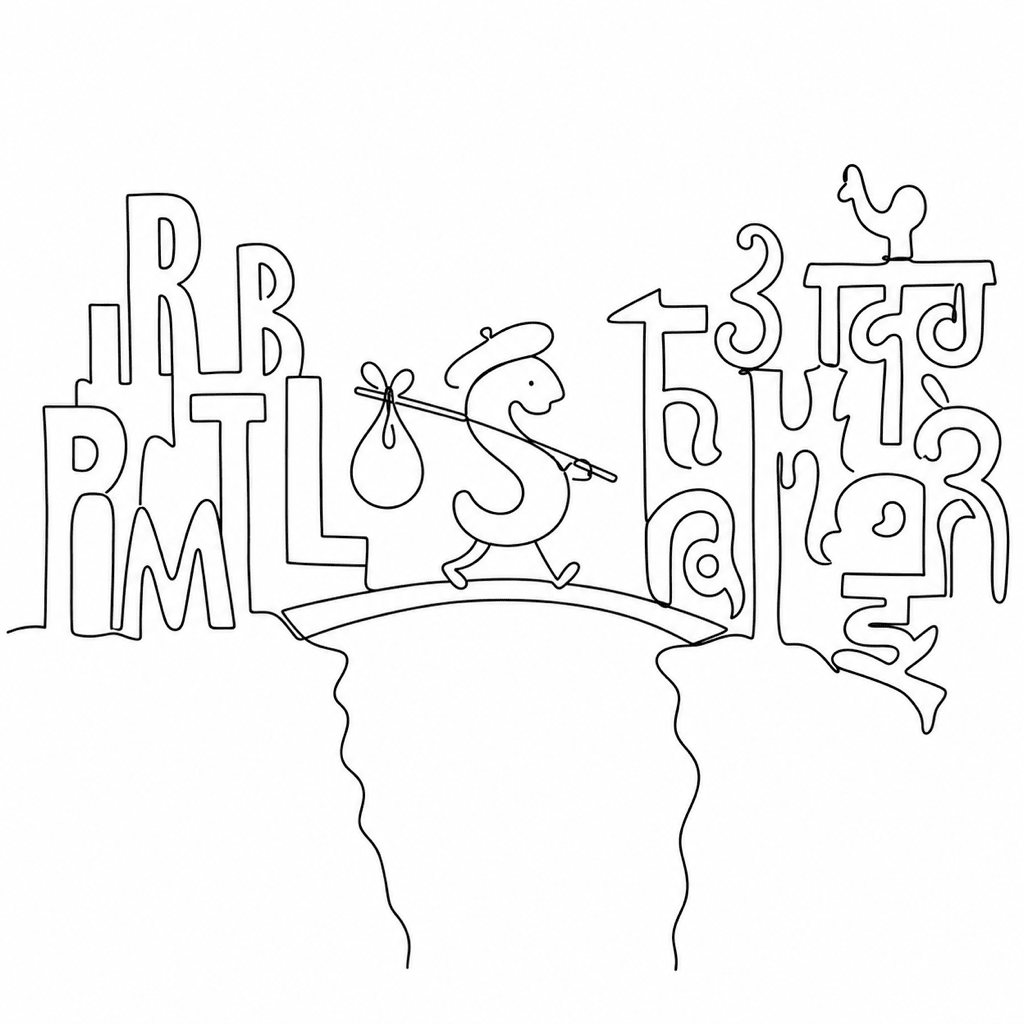
Type a word in Hebrew, read it back in Phoenician. Gimeltra transliterates consonants between 24 mostly-Semitic writing systems, dropping vowels and marks so the abjad skeleton carries across alphabets that never shared a keyboard.
No phonetic model, no vocalisation, no guesswork — one TSV of rules, Latin as the pivot, and a fast per-character pass. Built for linguists, students of ancient scripts, and developers who need programmatic transliteration.
Visual
Install
pip install gimeltra
Python 3.9+. Runtime dependencies: fonttools and regex.
Quick start
Library:
from gimeltra import tr

tr("שלום", sc="Hebr", to_sc="Latn")   # 'šlwm'
tr("bytk", sc="Latn", to_sc="Phnx")   # '𐤁𐤉𐤕𐤊'
tr("لرموز", to_sc="Hebr")             # 'לרמוז'  (source auto-detected)
Command line (gimeltrapy):
gimeltrapy -t "لرموز" -o Hebr        # לרמוز
echo "لرموز" | gimeltrapy -o Grek    # λρμυζ
gimeltrapy -i text.txt -o Narb       # read a file
gimeltrapy --stats                   # list every supported script
Scripts are named by their ISO 15924 code (Hebr, Arab, Latn, …). Omit -s / the sc argument and Gimeltra guesses the source from the text.
How it works
Every conversion runs three passes:
- Preprocess — decompose the input and strip all combining marks. Vowel points and diacritics are discarded here; this is what makes the transform abjad-only.
- Convert — map each character source → target. When a script pair has no direct rule, the character pivots through Latin: source → Latin → target. That is why any of the 24 scripts can reach any other.
- Postprocess — apply word-final letter forms and ligatures in the target script.
All rules live in one file, gimeltra/gimeltra.tsv, compiled to gimeltra_data.json by update.py. See the rule format docs to add or edit a script.
Because vowels are dropped, the transform is lossy and not always reversible: a script that folds two sounds onto one letter (Hebrew bet carries both b and v) cannot recover the distinction on the way back.
Supported scripts
Arabic, Imperial Aramaic, Brahmi, Chorasmian, Egyptian Hieroglyphs, Elymaic, Ethiopic, Greek, Hatran, Hebrew, Latin, Manichaean, Old North Arabian, Nabataean, Palmyrene, Inscriptional Pahlavi, Psalter Pahlavi, Phoenician, Inscriptional Parthian, Samaritan, Old South Arabian, Sogdian, Old Sogdian, Syriac, Ugaritic.
Full table with ISO 15924 codes: docs/scripts.md.
CLI reference
| Option | Meaning |
|---|---|
-t, --text TEXT | Text to transliterate |
-i, --input FILE | Read input from a file |
-s, --script CODE | Source script (ISO 15924); auto-detected if omitted |
-o, --to-script CODE | Target script; defaults to Latn |
--stats | List supported scripts |
-v, --verbose | -v progress, -vv debug |
-V, --version | Show version |
With no -t or -i, gimeltrapy reads from standard input.
Development
git clone https://github.com/twardoch/gimeltra
cd gimeltra
./build.sh          # ruff + mypy + pytest + build
Tests, lint, and type-checks also run in CI across Python 3.9–3.13. To edit the transliteration rules, change gimeltra/gimeltra.tsv and regenerate the data:
pip install "gimeltra[update]"
python -m gimeltra.update
Notes and limitations
Gimeltra is a non-standard, simplified romanization scheme, not a scholarly transliteration standard. It targets the consonantal skeleton and is best for converting between abjads or into ancient scripts — not for phonetic accuracy or faithful vocalised text.
License
MIT. See LICENSE. By Adam Twardoch.